Welcome STARK TOUCH DEVICE!


Optical Bonding
Our Optical Bonding Service
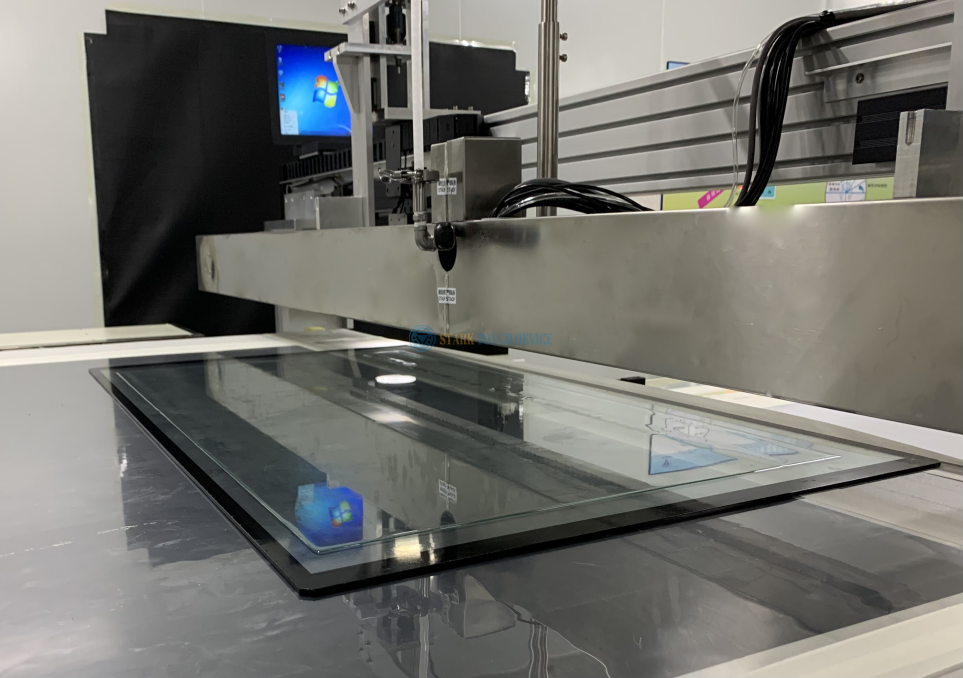
- Supply TP (Touch Panel) / CG (Cover Glass) + LCM Module / OC (Open Cell) Panel + Optical Bonding Service
- Supply Optical Bonding Service (Custom Touch Panel / CG + LCD Module / OC Panel)
Organic Silicone Glue (Germany Wacker)
- No yellowing even under high temperature
- Effectively prevents internal bubbles
- Prevents yellow screen phenomenon
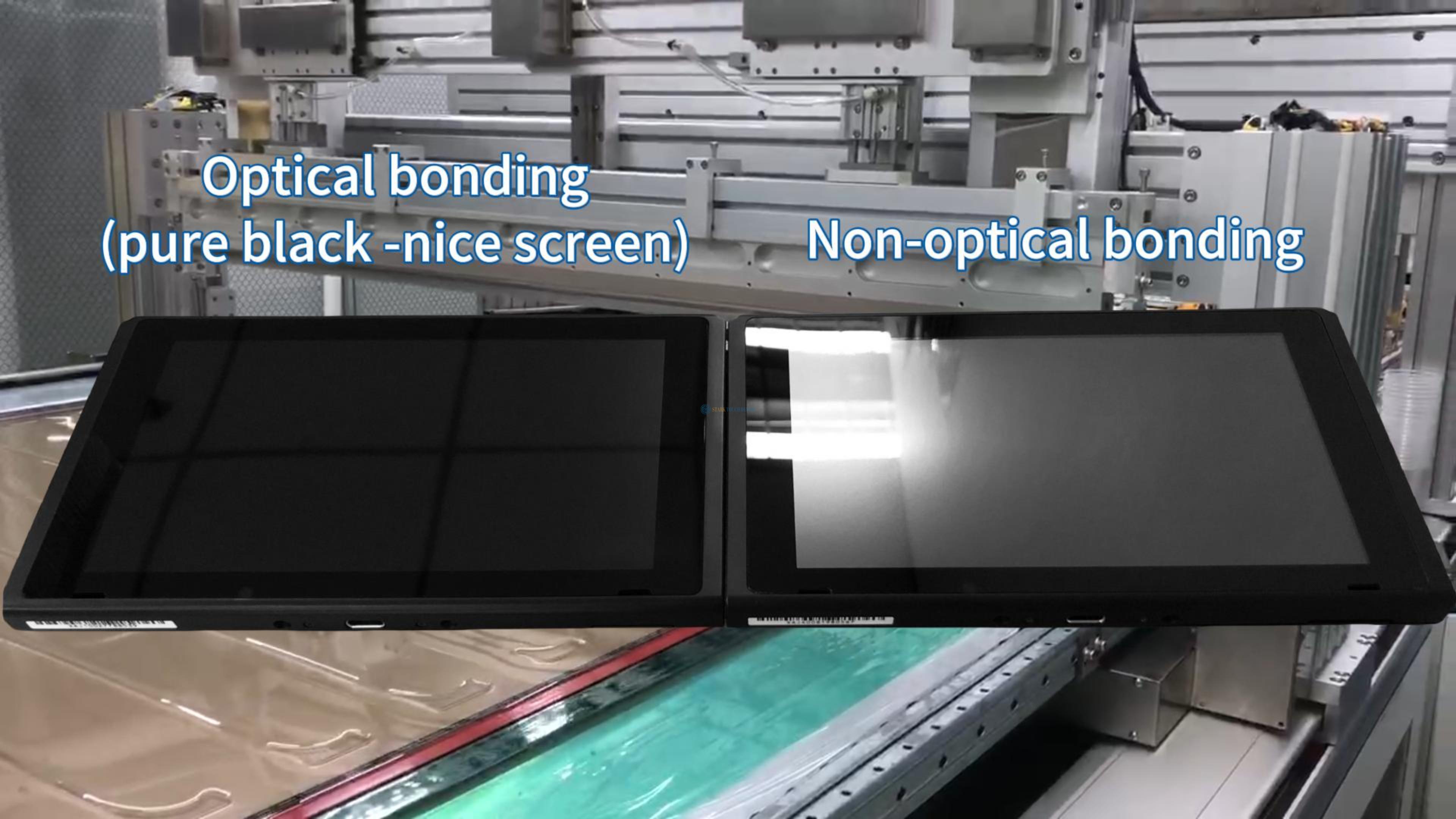
What is Optical Bonding?
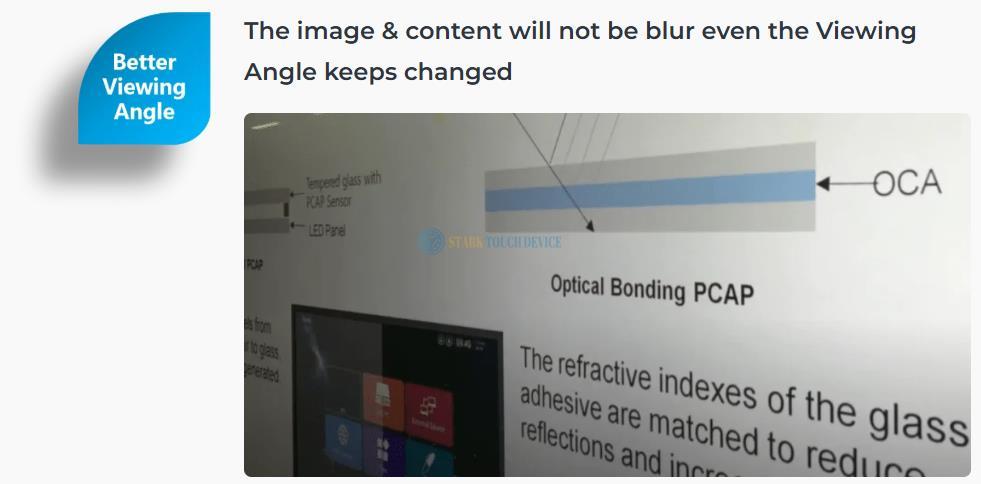
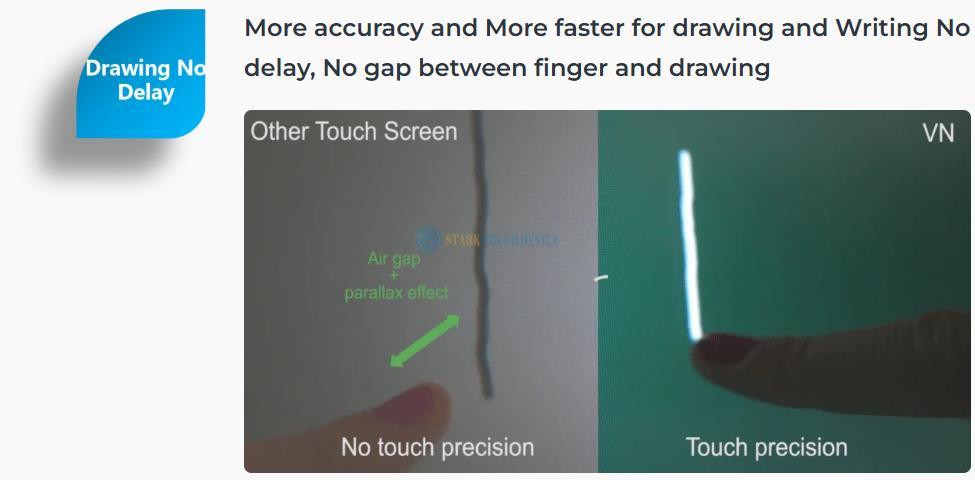
Optical bonding is a technology that uses optical-grade adhesive (OCR or OCA) to bond the display glass or touch panel directly to the TFT LCD panel, forming a solid laminate without any air gap or bubbles.
It is widely used in medical, military, transportation, retail and outdoor applications where high brightness, durability and reliability are required.
Optical Bonding Process
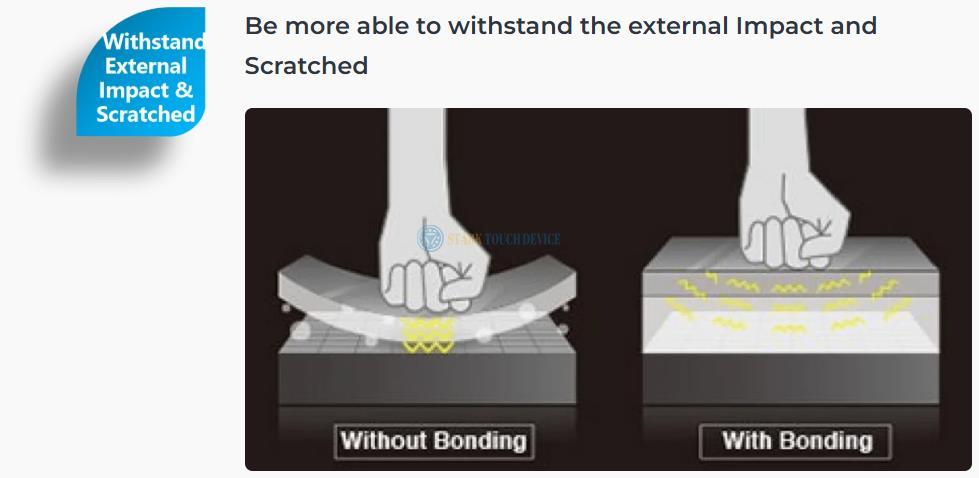
Our optical bonding technology improves optical performance, impact resistance and thermal management.
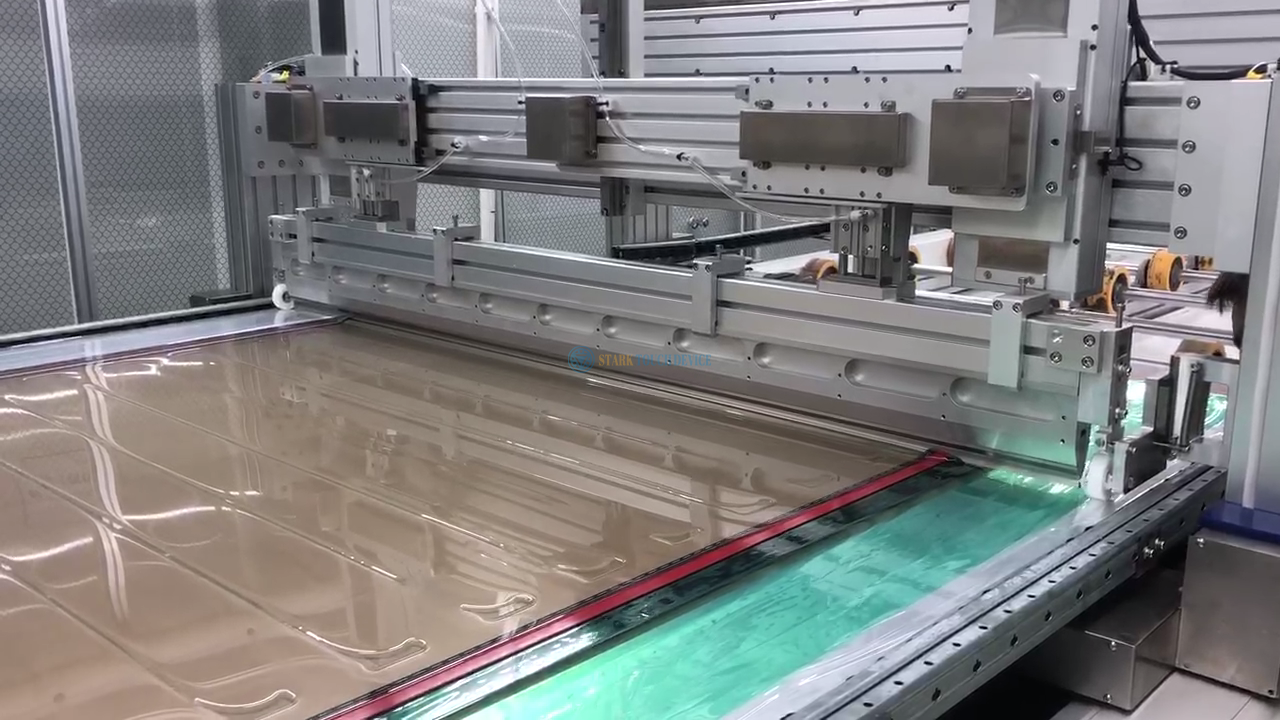
1. TP / LCM Inspection
LCM Inspection
a. Check for foreign objects or scratches on the screen
b. Ensure the metal frame is intact and undamaged
c. Check for dead pixels, dark spots and color abnormalities
TP Inspection
a. Inspect surface scratches and flex cable condition
b. Verify touch functionality
2. LCM Sealing Dam1. Apply black adhesive around the edges to prevent leakage during injection. 2. Cure the adhesive in an oven. 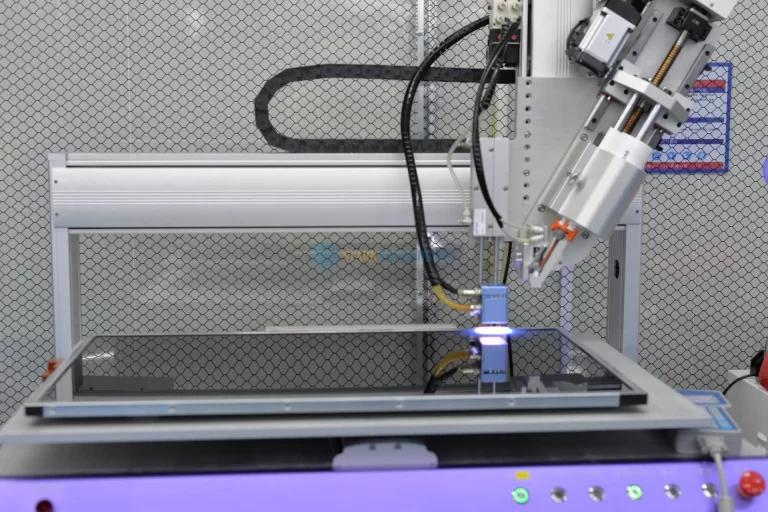
|
3. Remove Excess AdhesiveClear any excess black adhesive from the frame. 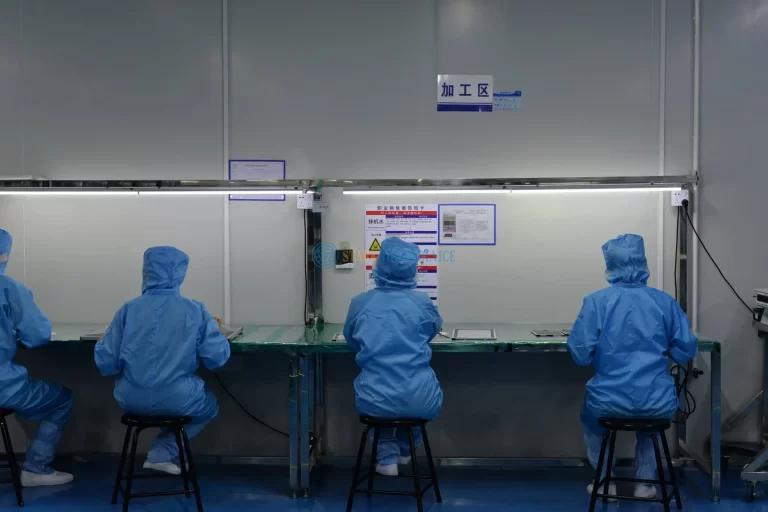
|
4. Inject Wacker SealantEnsure no air bubbles are formed during the process. 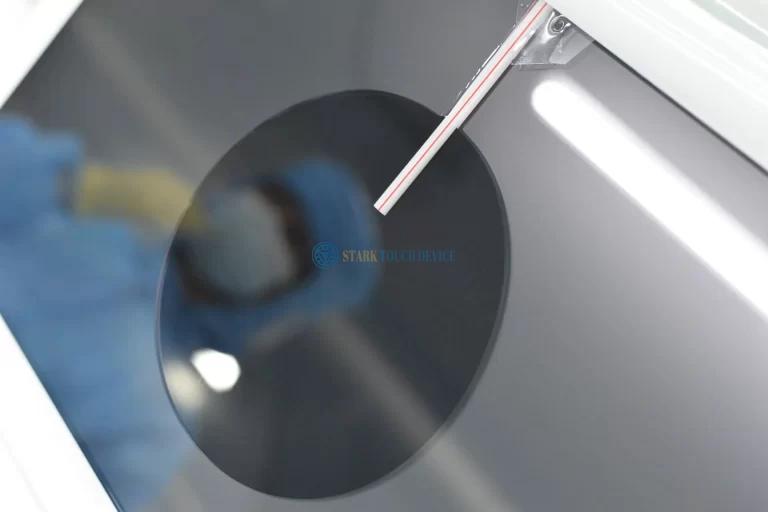
|
5. Seal Edges with Black AdhesiveEnhance waterproofing and reinforce the injected sealant layer. 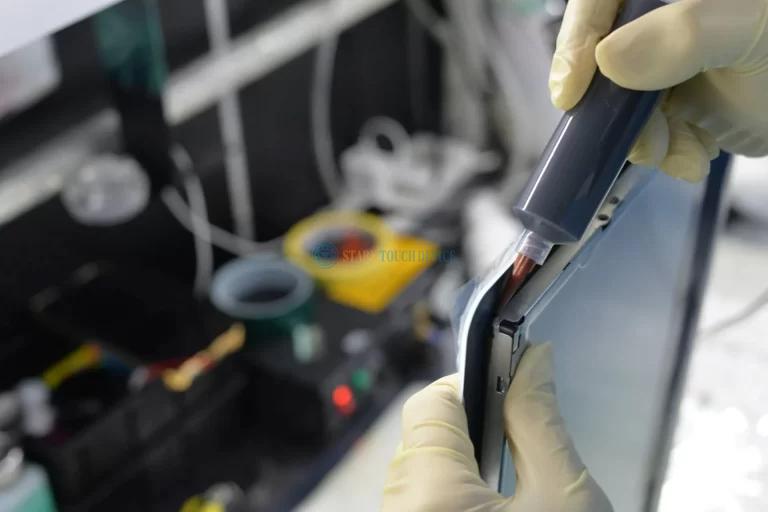
|
Optical Bonding VS Non-Optical Bonding
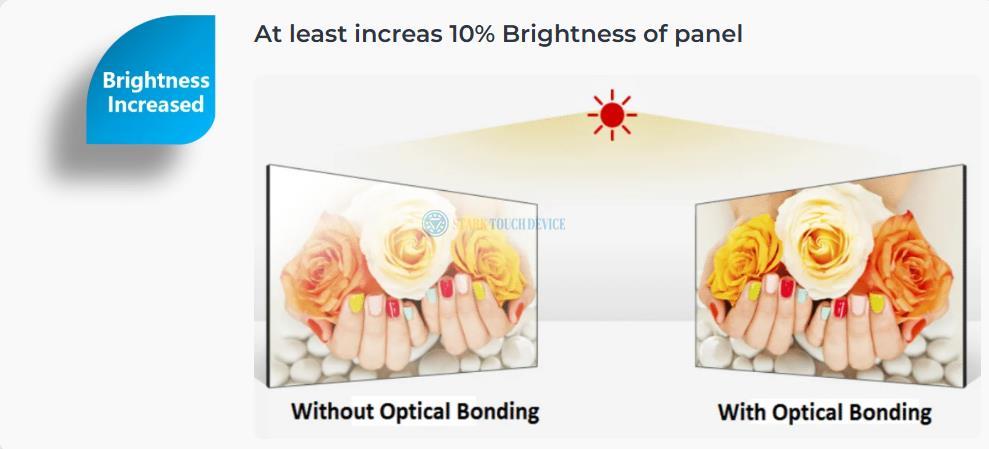
|
|
|
|
|
|
When optical bonding is worth the cost
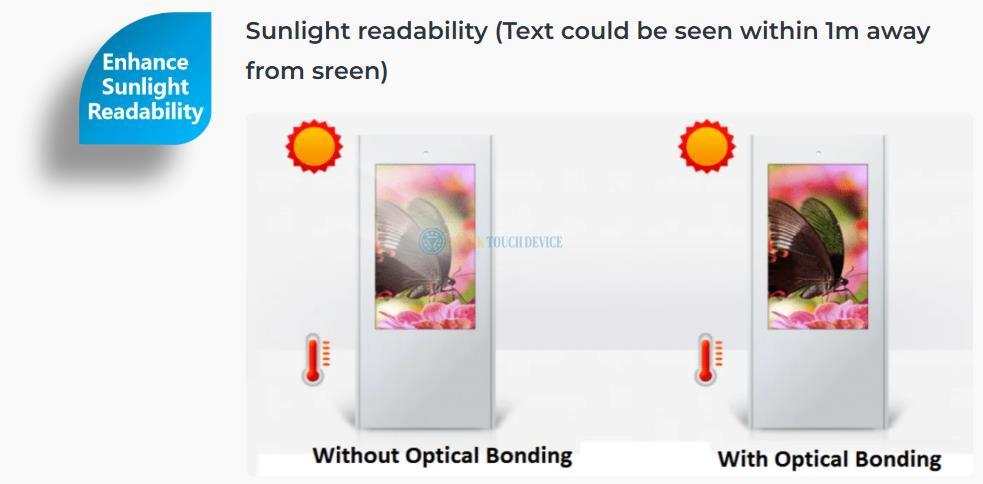
Optical bonding is not automatically the right choice for every project. It earns its place when the installation puts light on the screen, when contrast and legibility are being judged by the end user, or when the display has to survive condensation and physical stress. In a controlled indoor environment viewed from a comfortable distance, a standard air-gap assembly may be perfectly adequate, and the budget is usually better spent on the panel itself.
OCA versus LOCA
Two adhesive families are used in practice. Optically clear adhesive film (OCA) is applied as a solid sheet, which tends to give predictable thickness and stable yield on flat, standard-sized panels. Liquid optically clear adhesive (LOCA) is dispensed and cured, which suits curved surfaces, unusual outlines and larger formats where a film would be difficult to place without trapping air.
The trade-off buyers rarely see is rework. Bonding is far less forgiving than mechanical assembly: a bubble, a particle or a misalignment cannot be corrected by simply opening the unit again. Yield and rework policy therefore matter as much as the adhesive type when a project moves from sample to volume.
Bonding and brightness solve different problems
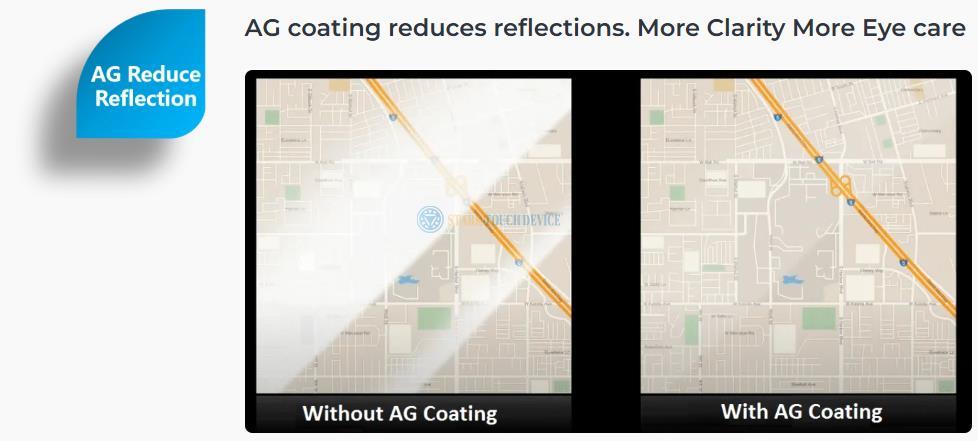
A high-brightness backlight raises how much light the panel emits. Optical bonding changes how much of the surrounding light is reflected back at the viewer and how much of the panel's own light is lost internally. Choosing only one of the two is a common specification mistake: a very bright screen with an air gap can still look washed out in sunlight, while a bonded screen with modest brightness can read better than its numbers suggest.
For installations that combine both — outdoor or window-facing positions — compare the outdoor digital signage range and the indoor digital signage range before deciding where the additional cost belongs.