Welcome STARK TOUCH DEVICE!


Touch Screen Monitors
An industrial touch monitor is a display built to be part of a machine or a process rather than a desk. The differences from an office screen show up in four places: how it is mounted, what it survives, how long it runs, and how the touch surface behaves when it is wet, gloved or covered.
Mounting determines everything else
Panel-mount, open-frame, chassis, VESA and desktop stands are not interchangeable options added at the end of a project. The mounting method fixes the front-panel dimensions, the sealing method, the depth behind the panel and how the unit is serviced later. Deciding mounting first avoids the common situation where the electronics are correct but the frame cannot be fitted into the existing cut-out.
Environment drives the specification
Ingress protection, operating temperature and vibration tolerance follow the installation, not the brochure. A monitor inside a control cabinet sees a different world from one on a wash-down line or on the mast of a vehicle. Where cleaning chemicals, hose-down or condensation are involved, the front-panel seal and the connector type matter as much as the IP number; for that kind of duty cycle a sealed IP65-rated unit is the usual starting point, such as the IP65 waterproof multi-touch LCD display.
Touch technology is a choice, not a default
Projected capacitive touch gives the familiar multi-touch behaviour and a smooth glass front, and it works well with bare fingers. Resistive touch survives gloves, styluses, water films and abrasive contact, which is why it remains common on factory floors and in outdoor kiosks. Surface acoustic wave and infrared suit very large formats. The right answer depends on who touches the screen, with what, and in what conditions.
Readability and lifetime
Brightness, contrast treatment and surface finish decide whether the screen can actually be read where it is installed. For bright or window-facing positions, optical bonding removes the internal air gap and raises contrast without increasing power. For sizes and formats beyond the standard range, the display has to be specified rather than selected from a list.
Because industrial equipment stays in service far longer than consumer hardware, long-term supply matters: a fixed configuration, a recorded approved sample, controlled batch consistency and advance notice when a panel or driver board reaches end of life.
What to confirm before ordering
Screen size and resolution; the mounting cut-out and depth available; ambient light and whether the screen faces a window; cleaning routine; operating temperature range; who touches the screen and with what; the interfaces the host system provides; and how long the equipment is expected to remain in service. These answers determine the specification more reliably than any product list does.
-
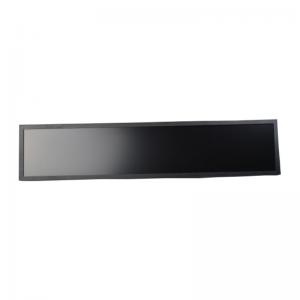
28-inch Industrial Long Strip Strip Screen Touch Monitor with Optical Bonding and Carrying Handle
-
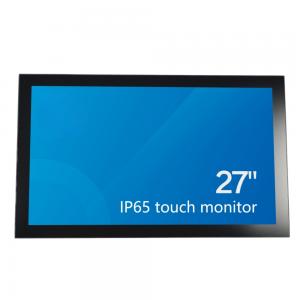
27 inch IP65 Optical Bonding Industrial Touch Monitor
-
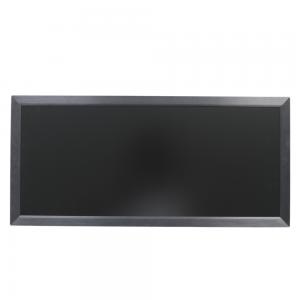
25-inch Industrial Optical Bonding Bar Display Custom Model
-
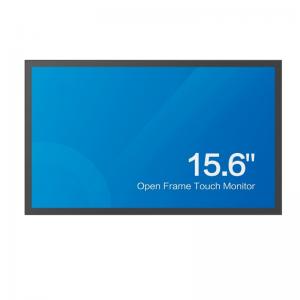
15.6" High-Brightness Optical Bonding Open-Frame Capacitive Touch Monitor 1000 Nits
-
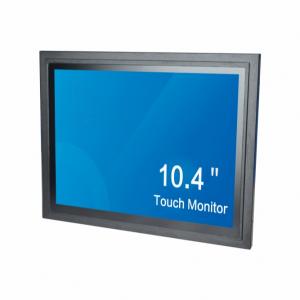
10.4 Inch High-Brightness Optical Bonded Industrial Touch Monitor 1000 Nits
-
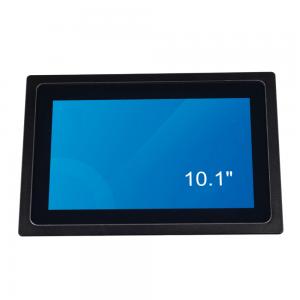
10.1" Open-Frame High-Brightness Touch Monitor 1000 Nits Optically Bonded
-
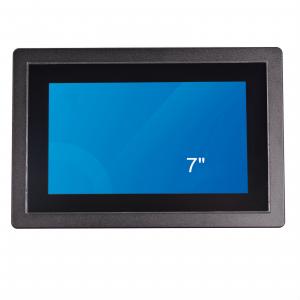
7 Inch Optically Bonded Open Frame High Brightness Industrial Touch Monitor, Customizable