Welcome STARK TOUCH DEVICE!


Blog
Power consumption rating of industrial control computer
Power Consumption Ratings for Industrial Control Computers
Industrial control computers (ICCs) are engineered to operate reliably in demanding environments, where power efficiency and stability are critical. Unlike consumer-grade PCs, their power consumption ratings vary significantly based on hardware configurations, operational tasks, and environmental conditions. This guide explores the factors influencing ICC power ratings and provides practical insights for system design.
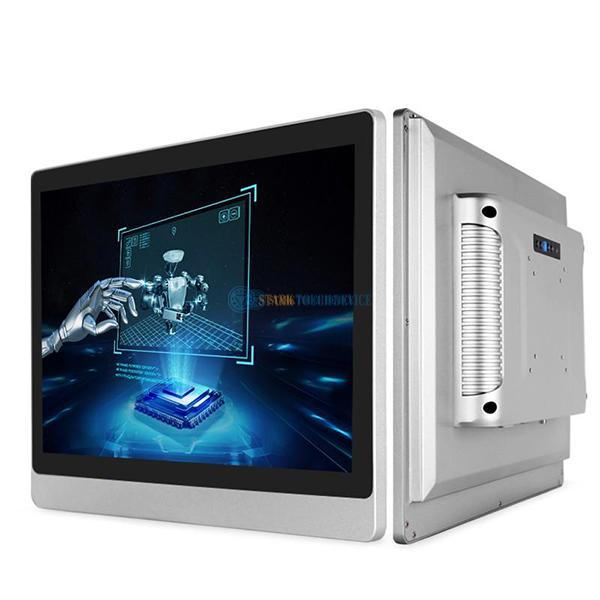
Understanding Power Consumption Ranges
Low-Power Applications
For basic monitoring tasks such as environmental sensors or simple data logging, ICCs typically consume 10W to 50W. These systems often use low-voltage processors (e.g., Intel Atom or ARM-based chips) and solid-state storage to minimize energy use. Passive cooling designs, such as heat sinks or finned enclosures, eliminate the need for fans, further reducing power draw. Applications include:
Warehouse inventory tracking: RFID scanners and barcode readers paired with lightweight processors.
Smart agriculture: Soil moisture sensors transmitting data via low-power wireless protocols.
Building automation: Lighting control systems operating on 12V/24V DC power.
Mid-Range Industrial Automation
Systems handling moderate workloads, such as PLC integration or machine vision preprocessing, require 100W to 250W. These ICCs balance performance and efficiency, often featuring:
Quad-core processors: Intel Core i5 or AMD Ryzen 5 series chips with 65W TDP.
Entry-level GPUs: Discrete graphics cards for basic image processing (e.g., NVIDIA Quadro P400 at 30W).
Rotational storage: 2.5-inch HDDs for cost-effective bulk data storage (8–10W per drive).
Typical use cases include:
Conveyor belt control: Synchronizing motors and sensors in food packaging lines.
Water treatment plants: Monitoring pH levels and adjusting chemical dosing in real time.
Energy management systems: Balancing grid load in microgrid deployments.
High-Performance Computing
Data-intensive applications like AI-driven quality inspection or real-time simulation demand 300W to 600W+. These ICCs incorporate:
High-core-count CPUs: Intel Xeon or AMD EPYC processors with 125W–250W TDP.
Professional GPUs: NVIDIA RTX A6000 (300W) for deep learning inference.
Redundant power supplies: Dual 500W units ensuring uptime during component failures.
Key scenarios include: