Welcome STARK TOUCH DEVICE!


Blog
The computing performance of high-frequency industrial control computers
High Clock Speed Industrial Control Computers: Unleashing Computational Power for Real-Time Performance
In industrial automation, the ability to process data quickly and accurately is critical for maintaining productivity, ensuring safety, and enabling advanced functionalities like machine learning and predictive maintenance. High clock speed industrial control computers address these demands by leveraging processors with elevated operating frequencies, enabling faster instruction execution and reduced latency. These systems excel in applications requiring real-time decision-making, such as robotic control, high-speed manufacturing, and edge computing, where delays can lead to operational inefficiencies or safety risks. By prioritizing raw computational speed alongside robust industrial-grade design, they deliver the performance needed to keep pace with modern manufacturing challenges.
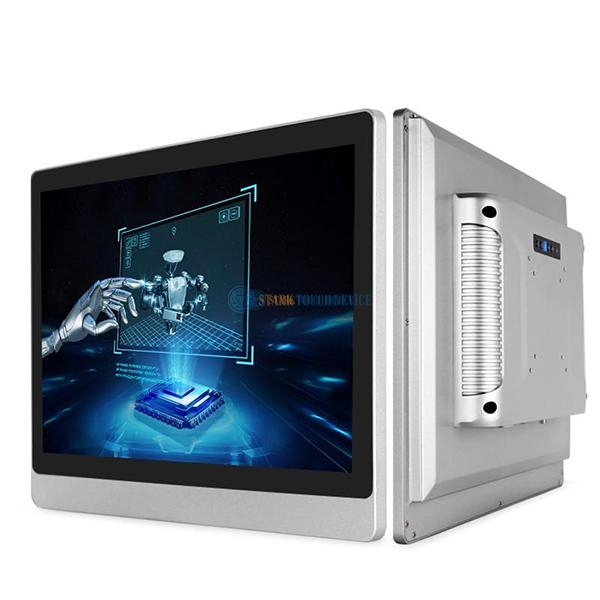
Enhanced Instruction Execution Through Elevated Clock Rates
The clock speed of a processor, measured in gigahertz (GHz), determines how many instructions it can execute per second. High clock speed industrial control computers feature CPUs designed to operate at frequencies significantly above standard models, often exceeding 3 GHz or more. This elevated rate allows each core to process data cycles faster, reducing the time required for tasks like sensor data analysis, motion control calculations, or communication protocol handling.
For example, in a robotic assembly line, a high clock speed computer can compute the trajectory of a robotic arm in milliseconds, ensuring precise movements even at high speeds. Similarly, in a chemical processing plant, real-time monitoring systems can analyze temperature, pressure, and flow rate data from hundreds of sensors simultaneously, triggering alerts or adjustments instantly if anomalies are detected. The ability to handle these computations rapidly minimizes response times, preventing equipment damage or production defects.
Overclocking Potential for Burst Performance
Some high clock speed industrial computers support overclocking—a technique where the processor operates beyond its rated frequency to deliver short bursts of increased performance. While overclocking is more common in consumer-grade systems, industrial variants implement it cautiously, often with enhanced cooling solutions to manage heat generation. This capability is valuable in scenarios requiring sudden spikes in computational power, such as emergency shutdown sequences or handling unexpected data surges from connected devices.
For instance, a power grid monitoring system might overclock its CPU during peak demand periods to analyze load distribution across substations faster, ensuring stable electricity supply. Once the burst demand subsides, the system returns to its standard clock speed, balancing performance with energy efficiency.
Multi-Core Parallelism for Concurrent Task Handling
While high clock speeds improve single-thread performance, modern industrial applications often demand simultaneous processing of multiple tasks. High clock speed industrial control computers address this by incorporating multi-core processors, where each core operates at elevated frequencies to handle independent workloads in parallel. This combination of speed and parallelism ensures the system remains responsive even under heavy loads.
For example, in a automotive manufacturing plant, a single computer might control multiple robotic stations, each requiring real-time motion planning and feedback processing. A quad-core processor running at 4 GHz can assign each core to a specific robot, ensuring smooth, synchronized operations without bottlenecks. Similarly, in a smart factory, one core might manage IoT device communication while another runs machine learning algorithms for quality inspection, all at high speed.
Hyper-Threading for Improved Thread Utilization
Many high clock speed industrial CPUs also support hyper-threading, a technology that allows each physical core to handle two threads simultaneously. This effectively doubles the number of logical cores, enabling better utilization of the processor’s resources. For instance, a 4-core, 8-thread CPU running at 3.5 GHz can process up to eight threads concurrently, improving efficiency in multi-threaded applications like database management or video analytics.
In a logistics warehouse, a control computer using hyper-threading might simultaneously track inventory levels via RFID scans, optimize picking routes using pathfinding algorithms, and update order statuses in real-time—all without lag. This capability ensures smooth operations even as the system handles diverse, overlapping tasks.
Optimized Cache Memory for Faster Data Access
High clock speed processors rely heavily on cache memory—a small, high-speed storage area located close to the CPU cores—to reduce the time needed to fetch frequently used data. Industrial control computers with elevated clock rates often feature larger or more advanced cache hierarchies, including L1, L2, and L3 caches, to ensure critical instructions and data are readily available.
For example, in a CNC machining application, the processor might repeatedly access tool path coordinates, spindle speed settings, and material properties during operation. A large L3 cache can store this data locally, allowing the CPU to retrieve it in nanoseconds rather than milliseconds, which would be required if fetching from system memory (RAM). This rapid access minimizes idle cycles, keeping the processor fully utilized and improving overall throughput.
Cache Coherency Protocols for Multi-Core Efficiency
In multi-core systems, cache coherency protocols ensure that all cores have consistent access to shared data, preventing conflicts or outdated information. High clock speed industrial computers implement advanced protocols like MESI (Modified, Exclusive, Shared, Invalid) to synchronize cache contents across cores efficiently. This coordination is crucial in applications like distributed control systems, where multiple processors collaborate on a single task.
For instance, in a power plant, a control computer might use multiple cores to monitor and adjust turbine parameters across different generators. Cache coherency ensures that changes made by one core are instantly visible to others, maintaining system stability and preventing errors due to mismatched data.
Robust Thermal Design for Sustained High-Speed Operation
Operating at elevated clock speeds generates significant heat, which can throttle performance or damage components if not managed properly. High clock speed industrial control computers incorporate robust thermal management solutions, such as heat sinks, fans, or liquid cooling systems, to dissipate heat effectively. These designs ensure the processor maintains its rated frequency under continuous load, avoiding performance degradation.
For example, a computer controlling a high-speed packaging line might run at peak clock speeds for hours, processing thousands of product inspections per minute. Its thermal design, featuring a large aluminum heat sink and variable-speed fans, keeps the CPU temperature within safe limits, ensuring consistent performance without interruptions.
Adaptive Thermal Throttling for Safety and Reliability
Some systems also implement adaptive thermal throttling, a feature that dynamically reduces clock speed if temperatures approach critical thresholds. While this temporarily lowers performance, it prevents hardware damage and ensures long-term reliability—a crucial consideration in industrial environments where downtime is costly.
In a mining operation, a control computer monitoring drilling equipment might encounter extreme ambient temperatures. If its cooling system struggles to keep up, thermal throttling reduces the CPU frequency just enough to maintain safe operating temperatures, allowing the system to continue functioning until conditions improve.
Conclusion
High clock speed industrial control computers redefine computational performance in industrial automation by combining elevated processor frequencies, multi-core parallelism, optimized cache memory, and robust thermal management. Their ability to execute instructions rapidly, handle concurrent tasks efficiently, and access data quickly makes them ideal for real-time applications like robotic control, high-speed manufacturing, and edge analytics. By prioritizing speed without compromising reliability, these systems empower organizations to meet the demands of modern production environments, where milliseconds can mean the difference between efficiency and error. Whether deployed in automotive plants, power grids, or smart factories, high clock speed designs prove that raw computational power remains a cornerstone of industrial innovation.