Welcome STARK TOUCH DEVICE!


Blog
Industrial control computer USB interface version
USB Interface Versions for Industrial Control Computers
Industrial control computers rely on USB interfaces to connect peripherals, sensors, and external storage devices, enabling flexible data transfer and device integration. The choice of USB version significantly impacts performance, reliability, and compatibility in industrial environments. This article explores the evolution of USB standards, their relevance to industrial applications, and key considerations for selecting the right version.
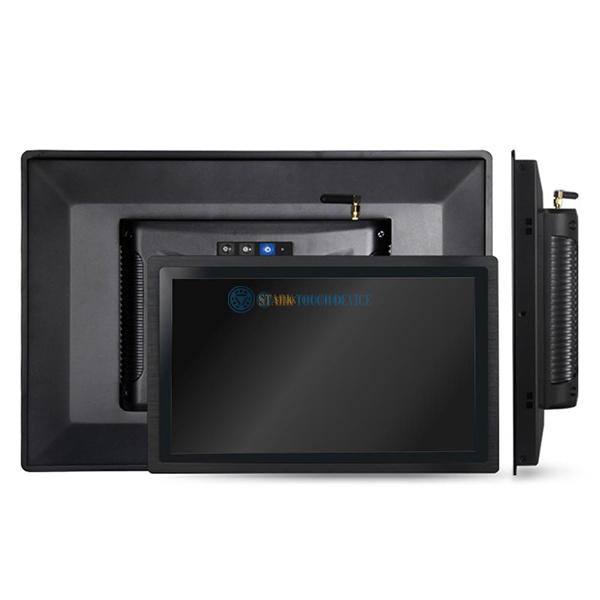
Evolution of USB Standards in Industrial Applications
USB 2.0: The Legacy Standard
USB 2.0, introduced in 2000, remains widely used in industrial settings due to its compatibility with older devices and cost-effectiveness. It supports data transfer rates of up to 480 Mbps, making it suitable for low-bandwidth applications like connecting basic sensors, keyboards, or mice. However, its limited speed and lack of advanced features like power delivery or improved error correction make it less ideal for modern industrial demands.
In environments where legacy equipment must coexist with newer systems, USB 2.0 provides a reliable fallback option. For example, older barcode scanners or serial-to-USB converters often rely on this standard, ensuring seamless integration without requiring hardware upgrades.
USB 3.x: Balancing Speed and Practicality
USB 3.0 and its successors (3.1, 3.2) introduced significant improvements over USB 2.0, including faster data transfer rates and enhanced power management. USB 3.0 supports speeds up to 5 Gbps, while USB 3.1 Gen 2 doubles this to 10 Gbps. These versions are ideal for industrial applications requiring high-speed data transfer, such as connecting high-resolution cameras for quality inspection or fast storage devices for logging large datasets.
Additionally, USB 3.x includes features like improved power delivery, allowing peripherals to draw more power directly from the host computer. This is particularly useful for powering devices like industrial displays or sensors without needing separate power supplies. However, the increased complexity of USB 3.x cables and connectors may pose challenges in harsh industrial environments, where durability is critical.
USB 4: The Future of Industrial Connectivity
USB 4, the latest standard, offers groundbreaking improvements in speed and versatility. It supports data transfer rates of up to 40 Gbps, making it comparable to Thunderbolt 3 in performance. This high bandwidth is essential for emerging industrial applications like real-time machine vision, augmented reality (AR) maintenance tools, and high-speed data acquisition systems.
USB 4 also introduces dynamic bandwidth allocation, allowing multiple devices to share the available bandwidth efficiently. This feature is particularly valuable in industrial setups where multiple peripherals, such as cameras, sensors, and storage devices, need to operate simultaneously without contention. Furthermore, USB 4’s backward compatibility with older USB standards ensures seamless integration with existing infrastructure.
Key Considerations for Selecting USB Versions in Industrial Settings
Bandwidth Requirements
The primary factor in choosing a USB version is the bandwidth needed for the application. For basic tasks like connecting a mouse or keyboard, USB 2.0 is sufficient. However, applications involving high-resolution video streaming, large file transfers, or real-time data acquisition demand higher-speed standards like USB 3.x or USB 4.
For instance, a factory using machine vision systems for quality control may require USB 3.1 Gen 2 or higher to handle the high data rates generated by multiple cameras. Similarly, industries relying on edge computing for data processing may need USB 4 to support fast connections between industrial PCs and external storage or GPUs.
Power Delivery Needs
Industrial peripherals often require stable power supplies to operate reliably. USB versions like USB 3.x and USB 4 offer improved power delivery capabilities, allowing them to power devices directly without additional cables. This simplifies wiring and reduces the risk of power-related failures in critical applications.
For example, a USB 3.1 port can supply up to 100 watts of power, making it suitable for charging tablets or powering industrial displays. In contrast, USB 2.0 is limited to 2.5 watts, which may not be sufficient for power-hungry devices. When selecting a USB version, engineers must evaluate the power requirements of connected peripherals to ensure compatibility.
Environmental Durability
Industrial environments are often harsh, with exposure to dust, moisture, vibrations, and extreme temperatures. The physical robustness of USB connectors and cables is crucial to maintaining reliable connections over time. While USB 4 offers superior performance, its smaller, more delicate connectors may be less suitable for environments with frequent physical stress.
In such cases, USB 3.x with ruggedized connectors or industrial-grade USB 2.0 solutions may be more appropriate. These options provide a balance between performance and durability, ensuring long-term reliability in demanding conditions. Additionally, using shielded cables can help protect against electromagnetic interference (EMI), a common issue in industrial settings.
Real-World Applications of Different USB Versions
Manufacturing Automation
In automated manufacturing lines, USB interfaces connect PLCs, sensors, and human-machine interfaces (HMIs). USB 2.0 is often used for basic control tasks, while USB 3.x supports high-speed data transfer from vision systems or laser scanners. For example, a robotic assembly line may use USB 3.1 to transmit real-time position data from encoders to the control system, ensuring precise movement and synchronization.
Energy and Utilities
In the energy sector, USB interfaces are used for monitoring and controlling equipment like transformers, generators, and smart meters. USB 3.x and USB 4 are valuable for applications requiring high-speed data logging or remote firmware updates. For instance, a wind turbine control system may use USB 4 to transfer large volumes of operational data to a central server for analysis, enabling predictive maintenance and optimizing performance.
Transportation and Logistics
PREVIOUS:Industrial control computer display output interface