Welcome STARK TOUCH DEVICE!


Blog
Industrial control computer display output interface
Display Output Interfaces for Industrial Control Computers
Industrial control computers rely on robust display output interfaces to connect with monitors, touchscreens, and other visual output devices. These interfaces play a critical role in ensuring real-time data visualization, operator interaction, and system monitoring in industrial environments. Selecting the right display output interface involves considering factors like resolution support, signal integrity, and environmental compatibility. This article explores common display output options for industrial control computers and their suitability for various applications.
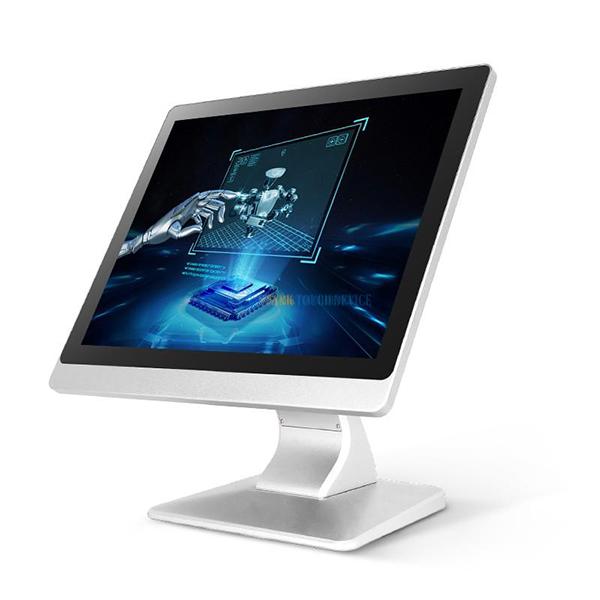
Traditional Display Interfaces in Industrial Settings
VGA: The Legacy Standard
VGA (Video Graphics Array) has been a staple in industrial computing for decades due to its widespread compatibility and simplicity. It supports resolutions up to 1920x1080 at 60Hz, making it suitable for basic monitoring tasks and legacy systems. While VGA is analog, it remains relevant in environments where digital interfaces are unnecessary or cost-prohibitive.
One advantage of VGA is its resilience to electromagnetic interference (EMI), a common issue in industrial settings with heavy machinery. The analog signal can tolerate some noise without significant degradation, ensuring reliable operation in harsh conditions. However, VGA’s limitations include lower resolution support and the need for separate audio cables, as it does not transmit sound.
DVI: Bridging Analog and Digital
DVI (Digital Visual Interface) emerged as a transitional technology, offering both analog and digital signal transmission. DVI-I (Integrated) supports both formats, while DVI-D (Digital) is purely digital. This flexibility makes DVI suitable for industrial applications where a mix of analog and digital displays may be used.
DVI supports higher resolutions than VGA, with single-link DVI handling up to 1920x1200 at 60Hz and dual-link DVI supporting resolutions up to 2560x1600. This makes it ideal for applications requiring sharper visuals, such as process control dashboards or detailed schematic displays. However, DVI is gradually being phased out in favor of more modern interfaces like HDMI and DisplayPort.
Modern Display Interfaces for High-Performance Industrial Applications
HDMI: Versatility and High Definition
HDMI (High-Definition Multimedia Interface) has become the go-to choice for many industrial applications due to its combination of high resolution, audio support, and compact connectors. HDMI supports resolutions up to 8K at 60Hz, depending on the version, making it suitable for detailed visualizations in industries like automotive manufacturing or semiconductor inspection.
In addition to video, HDMI transmits multi-channel audio, simplifying wiring in applications where sound is essential, such as interactive training systems or multimedia kiosks. HDMI also supports features like Consumer Electronics Control (CEC), allowing connected devices to be controlled via a single remote—though this is less commonly used in industrial settings. The compact size of HDMI connectors makes them ideal for space-constrained environments.
DisplayPort: The High-Bandwidth Solution
DisplayPort is designed for high-performance applications, offering superior bandwidth and advanced features compared to HDMI. It supports resolutions up to 16K at 60Hz with DisplayPort 2.0, making it suitable for ultra-high-definition monitoring in industries like aerospace or medical imaging. DisplayPort also supports multi-stream transport (MST), allowing multiple displays to be daisy-chained from a single output.
Another advantage of DisplayPort is its support for adaptive sync technologies like FreeSync and G-Sync, which reduce screen tearing and stuttering in dynamic applications like robotics control or virtual reality training. DisplayPort’s locking connector design also enhances reliability in industrial environments, preventing accidental disconnections due to vibrations or movement.
Specialized Display Interfaces for Industrial Challenges
LVDS: Low-Voltage Differential Signaling
LVDS (Low-Voltage Differential Signaling) is a high-speed digital interface commonly used in embedded industrial systems where compact size and low power consumption are critical. LVDS is often found in flat-panel displays, touchscreens, and camera modules, providing reliable signal transmission over long distances with minimal EMI susceptibility.
One key benefit of LVDS is its ability to support high data rates while maintaining low power consumption, making it ideal for battery-powered or energy-sensitive industrial devices. LVDS is also highly scalable, allowing multiple channels to be used in parallel for increased bandwidth. However, LVDS requires specialized hardware for implementation, limiting its use to applications where its advantages justify the additional complexity.
Embedded DisplayPort (eDP): Space-Efficient Integration
eDP (Embedded DisplayPort) is a variant of DisplayPort designed for integration into motherboards and system-on-chip (SoC) designs. It is commonly used in industrial tablets, all-in-one PCs, and other compact devices where space is at a premium. eDP offers the same high-resolution support as standard DisplayPort but with a smaller connector and reduced power consumption.
eDP’s compact form factor makes it ideal for portable industrial devices or systems where external connectors are impractical. It also supports features like panel self-refresh (PSR), which reduces power usage by allowing the display to refresh independently of the host processor. This is particularly valuable in battery-operated industrial tools or wearable devices.
Factors Influencing Display Interface Selection in Industrial Environments
Resolution and Refresh Rate Requirements
The choice of display interface depends heavily on the resolution and refresh rate needed for the application. For basic monitoring tasks, VGA or DVI may suffice, while high-detail applications like machine vision or CAD modeling require HDMI or DisplayPort for their superior bandwidth. Industries like gaming or virtual reality may even demand the highest resolutions and refresh rates supported by DisplayPort 2.0.
Environmental Durability
Industrial environments expose display interfaces to dust, moisture, vibrations, and extreme temperatures. The physical robustness of connectors and cables is crucial to maintaining reliable connections. For example, locking connectors like those found on DisplayPort or ruggedized HDMI cables can prevent accidental disconnections in high-vibration settings.
PREVIOUS:Industrial control computer PLC expansion module adaptation