Welcome STARK TOUCH DEVICE!


Blog
The number of expansion slots for industrial control computers
Understanding Expansion Slot Quantities in Industrial Control Computers
Expansion slots are a critical component of industrial control computers (ICCs), enabling them to adapt to diverse industrial applications by accommodating various specialized cards. The number of expansion slots in an ICC varies based on its intended use, physical size, and the need for specific functionalities. This guide explores the common expansion slot configurations found in ICCs and their typical applications.
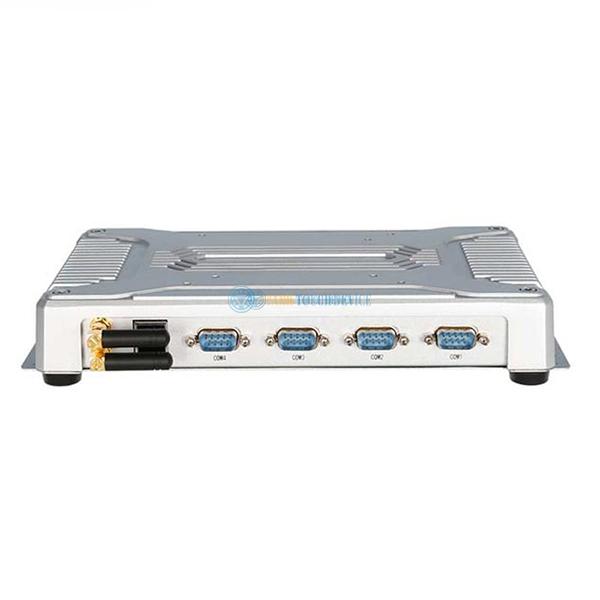
Standard Expansion Slot Configurations
Compact Industrial Control Computers
Compact ICCs are designed for space-constrained environments where minimizing footprint is essential. These systems typically feature a limited number of expansion slots, often ranging from 1 to 4. Despite their compact size, they provide sufficient slots for essential functionalities like adding network interfaces, serial communication ports, or basic data acquisition cards.
These slots are usually a mix of PCI and PCIe types, with PCIe being preferred for higher-speed applications. The compact design often prioritizes low-profile cards to fit within the reduced chassis height while maintaining compatibility with standard card form factors through riser cards or specialized adapters.
Mid-Range Industrial Control Computers
Mid-range ICCs offer a balance between compactness and expandability, making them suitable for a wide range of industrial applications. These systems typically provide 4 to 7 expansion slots, allowing for more complex configurations. Users can install multiple specialized cards simultaneously, such as high-speed data acquisition cards, motion control cards, and advanced networking interfaces.
The increased slot count supports mixed-slot configurations, combining PCI, PCIe, and sometimes legacy ISA slots for compatibility with older industrial equipment. This versatility makes mid-range ICCs ideal for applications like manufacturing automation, where diverse peripheral connectivity is required.
High-End and Specialized Expansion Configurations
Full-Size Rack-Mounted Industrial Control Computers
Full-size rack-mounted ICCs are designed for applications demanding maximum expandability and performance. These systems typically offer 7 to 14 expansion slots, housed in standard 19-inch rack chassis. The generous slot count allows for the installation of multiple high-performance cards, including GPUs for machine vision applications, RAID controllers for data storage, and redundant network interfaces for high-availability systems.
The rack-mounted design facilitates efficient cable management and cooling, essential for maintaining system stability when operating with numerous expansion cards. These ICCs are commonly used in large-scale industrial automation, data centers, and critical infrastructure applications where reliability and performance are paramount.
Specialized Industrial Control Computers with Extended Slot Counts
For applications requiring an exceptional level of expandability, some ICCs offer extended slot counts beyond the standard configurations. These systems may feature 12 to 20 expansion slots, often achieved through the use of passive backplanes or multiple PCIe switch chips to expand the available slot capacity.
Such high slot counts are typically found in specialized applications like large-scale data acquisition systems, where numerous sensor inputs must be processed simultaneously, or in simulation and testing environments requiring multiple interface cards. The extended slot configurations enable these ICCs to serve as central hubs in complex industrial systems, integrating diverse functionalities into a single, manageable platform.